Planning Your Layout Before Spending Any Money If you ask me what makes the difference between an aquascape making somebody thousands of pounds happy and thousands of pounds poorer, the answer is always the same: planning. I see students and hobbyists come into aqu shops all the time bubbling over with enthusiasm about aquascaping for the first time, then leave hours later 300 quid down at the cashier with bags of rocks they can’t even fit in their tanks let alone aquascape properly and plants that will bush out and overpower their layouts in months. Aquascaping is awesome, but getting that initial rush of enthusiasm and failing miserably sucks.
There’s nothing wrong with deciding to aquascape, but taking a few minutes before you make your first trip to the fish store to plan your layout will save you tonnes of hassle and potentially hundreds of pounds. Planning your layout in advance allows you to spend your money wisely rather than make expensive mistakes. You can account for everything from tried-and-tested composition techniques that make aquascapes attractive to practicalities like making sure you have deep enough substrate for the plants you want to grow or allowing enough room for them to grow to avoid constantly pruning your aquascape back to avoid overcrowding.
Planning your layout is quick, easy and free. It also saves you a fortune and results in a far better tank than wandering into a fish store blindly ever will.
Planning Is More Scientific Than You Think As with most areas of aquascaping, it’s not just subjective opinion – some solid science backs up why certain layouts work and others don’t.
Composition As well as looking at reference layouts and working out what styles you like, there are some basic principles of visual composition you can employ during the planning stage to make sure your aquascape will be pleasing to look at when it’s done. As well as simply looking ‘right’, these compositional elements are based on maths and psychology that make attractive, interesting layouts that we as viewers perceive as satisfying to look at. The golden ratio: Golden ratio composition places your primary focal point off-centre at roughly 1/3 or 2/3 into the tank rather than dead centre.
This isn’t mandatory but creating focal harmony using the golden ratio is applied in ADA’s global aquascaping approach. Rule of thirds: Much like the holy grail of photography, the rule of thirds applies to aquascaping. Imagine your tank divided into thirds, both horizontally and vertically.
You should aim to position your main ‘anchor’ elements either on those lines or at their intersections. That main piece of driftwood? Don’t centre it, place it on one of those guidelines.
Same with your largest rock or main cluster of plants. Visual balance: Imagine you have a large, dark piece of driftwood on the left side of your tank. The visual ‘weight’ of that piece of wood isn’t balanced by having an empty space on the right side.
Your aquarium needs balancing elements on both sides, but it doesn’t mean you need to match that large wood on the left with another big heavy-looking piece on the right. Place several small, light rocks on the right or a large patch offoreground moss to balance it out instead. Creating depth: This might sound crazy, but your aquascape should look bigger than your tank actually is.
Planning your aquascape in layers will help create this illusion of depth. Your foreground elements should be smaller than your middle ground elements which should be smaller than your background elements. You should also plan for your substrate to slope slightly from the front of the tank to the back.
Planning Your Aquascape Know your tank size and shape: Knowing your tank dimensions inside and out is essential for proper aquascape planning. Measuring will ensure you don’t get caught out and purchase plants that are too big or substrate you don’t need (The Spruce Pets). It also helps you better visualise your layout when deciding on the correct scale for plants and hardscape elements.
Collect reference images: Before even considering what species you want to keep, spend some time browsing online layouts. Websites like Aquatic Gardeners Association have countless examples of aquascapes you can learn from. Don’t go in looking for your new favourite aquascape blindly, analyse them.
What do you like about the layout? How do they utilise empty space? Where are their focal points?
Work out your budget: Budgets don’t have to be set in stone, but having a rough idea and fractions of the total budget you’re willing to spend on different elements will help immensely. What’s your total budget? Hardscape can make up to 30 percent (Aquarium Gardens) of your budget but this will vary wildly depending on the look you’re going for.
I spent around 60% of my budget on plants and only 15% on hardscape when aquascaping my dutch style planted tank, but an Iwagumi would have 50% hardscape and 20% plants. Assess how much time you want to spend maintaining your tank each week: It’s all well and good drooling over your dream high tech planted tank with CO2 injection and every obscure aquascaping plant out there on Pinterest, but are you prepared for the weekly maintenance that comes with it? High-tech aquascapes with lots of plants require regular water changes, fertiliser dosing and pruning to avoid algae blooms.
Planning your layout with your maintenance time in mind will save a lot of headaches down the road. Expect your equipment to add at least 30% to your initial setup cost if you’re planning on using CO2 (Practical Fishkeeping). Your maintenance commitment will be even more of an added cost than your equipment.
Plan your lighting and equipment needs first: Lastly, what are you going to light your tank with? There’s no point buying carpets plants when all you’ve got is a basic freshwater lighting kit. Plan what equipment you want or need first and work from there.
Do you want to keep low-tech or are you planning on injecting CO2? Low light plants have different layout design styles than high-light aquascapes. Layout Planning Techniques Sketching your ideas out: One of the easiest ways to plan your layout is to grab a pencil and sketch out some ideas.
Start with a basic rectangular border to represent the view of your tank from above. Sketch in your hardscape first, then add some plant patches. Overlay a grid to cheque your focal points aren’t smack-bang in the centre.
You don’t need to be Picasso, these are working sketches. Cardboard cutouts: Cut some cardboard to represent your rocks and move them around on a piece of paper that represents your substrate. This gives you a better idea of how your rocks fit together and compose without lifting heavy rocks around your bedroom.
Print out photos of your tank: Take some photos of your tank from the front, left and right side. Print these photos out or pull them up on your phone and use them as a base to sketch over or use design software to drop elements onto. Plan focal points and hierarchy: Everything in your aquascape should have a purpose.
If it doesn’t contribute to the overall feel or look of your aquascape, don’t include it! Your primary focal point should be the largest and most eye-catching element positioned using the rules of composition mentioned above. Now plan your secondary points.
You can have as many focal points as you want but make sure you plan their hierarchy. Hardscape Pick stones from the same location: Whenever possible, only pick stones from the same lake or riverbed. Drastically different stones will stick out like a sore thumb and sometimes can affect the chemistry of your tank if they’re from different geological locations.
Plan for odd-numbered groupings: When choosing how many rocks you want to use, utilise odd numbers. One large, one medium and two small looks more natural than two of each. Leave enough space for plants: Just as important as leaving room for your plants to grow is leaving enough room for your fish to swim!
Always plan your hardscape first, then add plants around it. Plan your wood placement: Make sure the wood you’re choosing isn’t too big. A lot of aquascapers use juice bottles as scale when buying wood.
Will your piece of driftwood fit in your juice bottle? If not, it’s probably too big. Plan how you’re going to position your driftwood and if it needs anchoring down or not.
A lot of driftwood you buy will float for weeks or even months after you soak it. Pick appropriately sized hardscape: Speaking of size, make sure you leave enough space for plants and your fish to swim! Don’t cram your aquascape full of rocks.
Plan for your hardscape to take up roughly 2/3rds of your tanks space. Do your research: Certain stones are going to create higher pH and GH than others. This doesn’t mean you can’t have them, it just means you need to plan your plants and fish around your chosen hardscape.
Plants Learn plant growth rates and match plants accordingly: Surrounding your fast growers with slow-moderate growers will minimise pruning and allow your aquascape to grow together cohesively (LiveAquaria). Understand your lighting: Stocking up on bunches of Anubias just because you can find them at your lfs won’t create a good low-tech aquascape. Learn which plants can grow in low light and branch out from there.
You Might Also Like
Low-tech aquascaping isn’t limited to those generic little swords we all know and love. Plan on maintaining your plants: Certain plants need trimming once a week to maintain their shape. Don’t fill your aquascape with tricky high-maintenance plants unless you’re willing to spend hours pruning and tinkering with your aquarium each week.
Substrate depth matters: Do your plants require deep finesubstrate to root deeply or will loose fluorite do? Planning your substrate depth and composition is important (Buce Plant). Deep rooting plants should be planted in areas with deeper substrate and finesubstrate.
Foreground plants can get by with shallow substrate. Planning Mistakes I’ve Seen Kill Budgets Let me fill you in on some expensive lessons I had to learn firsthand. Mistake #1: Buying your hardscape without planning.
Walk into a fish store and autumn in love with a beautiful piece of driftwood or a large rock. By itself, it looks amazing, but there’s no way that wood will fit in your nano tank. Solution: Always plan your hardscape first.
Mistake #2: Not leaving enough room for plant growth. I planned an amazing aquascape but didn’t leave enough room for my plants to grow. My cryptocorynes bushed out in no time and hid my cool driftwood.
Solution: Learn plant growth rates and leave enough room. Mistake #3: Buying a rainforest aquarium you can’t support. Do you have the time, equipment or money to keep rainforest dart frogs?
Buying rare expensive livestock you can’t properly care for stresses the living daylights out of me. Research your planned livestock to ensure your tanks conditions and maintenance matches their needs. Mistake #4: Not planning deep enough substrate.
Substrate settles over time. If you order 2 inches of aquasoil thinking you’ll have deep substrate for your plants, you’ll be disappointed when a month down the line it’s only an inch and a half deep. Plan how much substrate you need to order based on how much it settles.
Mistake #5: Plants that are too big or small for your tank. Nano aquascapes are tough because every plant has to be perfect. It’s extremely easy to purchase plants that look small in the fish store but are too big for your tank.
Solution: Don’t cheap out and buy cheap plastic plants. Learn average plant sizes and leave enough room. Mistake #6: Poor budgeting.
Picked out some amazing aquascaping rocks only to find you spent your entire budget on hardscape. Now you can only afford cheap liners and glue. Plan out your budget beforehand and split your costs into different categories.
Research has shown time and time again that planned aquascapes are more attractive to humans. Study after study show aquascapes that followed these basic rules had lower cortisol levels (stress hormone) when studied. We aren’t the only ones that prefer aquascapes that follow the ‘rules’.
Feed your aquarium correctly and you’ll have thriving aquatic plants that fill out your aquascape how you want them to. Plan your layout and you’ll win. Nano Tanks Nano tanks take more planning since there’s little room for error.
Pick too large of plants and they’ll out-compete each other. Choose badly and your aquascape will look empty. Pick hardscape too big and you won’t be able to find anything to fill your tank with.
Large Tanks Large aquariums give you a lot more freedom with your layout. But just because you have a 300 gallon doesn’t mean you should throw any old rocks in there. Large tanks require you to plan your aquascape from every angle since you’ll be viewing it from almost 360 degrees.
Breeding Tanks These aquascapes tend to look very different from your typical aquascape. Plants are usually thinner and less dense to give fry lots of places to hide. Planning your aquascape with your fish’s life cycle will help you keep more successful births.
Low-Tech Aquariums Low-tech aquascapes are not less planned than their high-tech alternatives. You still need to plan out every element you’re going to include. However, you will be limited to low-light aquascaping plants.
Benefits of Planning You should be sensing a theme by now. Take the time to plan and your life will be better in more ways than one. You save money: This should go without saying.
Pre-planning allows you to pick exactly what you need. No more buying ten bags of aquasoil because you didn’t know how much you needed. You save time: Cycling your aquarium and getting things planted won’t take you as long because everything you purchased is compatible.
Plants you picked that aren’t suited to your lighting conditions won’t melt or refuse to grow. Less maintenance: Stocking your aquarium with plants that have similar lighting and fertiliser needs will create a balanced aquascape that requires little maintenance. Pick plants that all need weekly trimming and you’ll constantly be maintaining your aquarium.
Higher success rate: Instagram worthy aquascapes don’t come by magic. Taking the time to plan your perfect aquascape will prevent you from making any costly mistakes that can kill your livestock. More enjoyable experience: Patience is a virtue they say.
Enjoy the planning process and you’ll continue to enjoy your aquarium months down the road. Learn more: Everything you learn while planning your dream aquarium can be used to aquascape future tanks. You’ll become a better aquascaper every time you plan.
Getting Started With Planning Learning how to plan your aquascape is just like anything else. Baby steps. Step 1 – Take measurements of your tank and decide on a general layout style you want to go with.
Week 1 Step 2 – Research specific composition techniques you want to utilise and pick a colour palette you want to stick to.
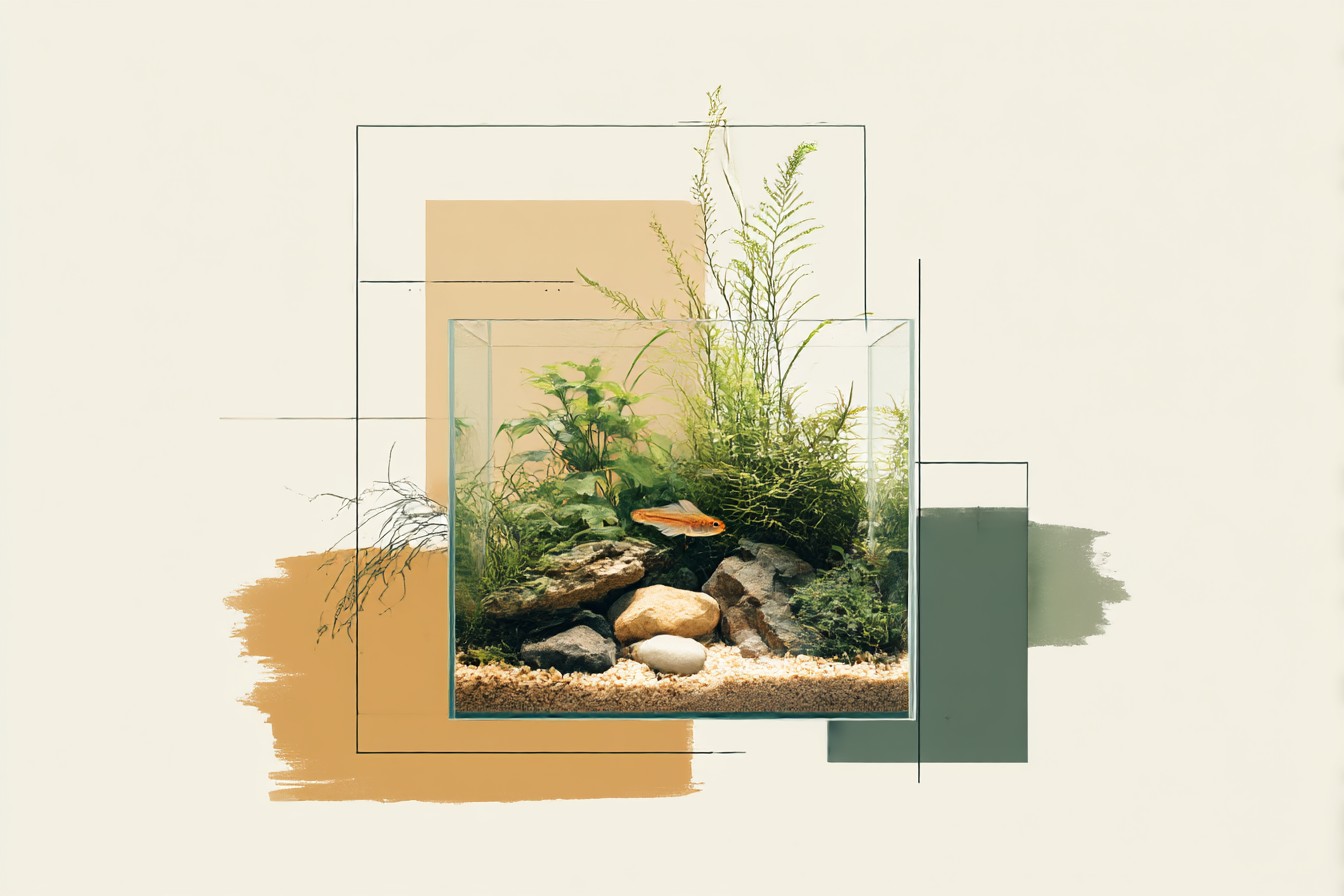
Also decide on what equipment you’ll need. Week 2-3 Step 3 – Pick which aquascaping plants you want to use and pick your fish during this phase as well.
Learn what equipment you need and do more research on that. Week 3-4 Step 4 – By now you should have a concrete plan with a list of everything you need to purchase. Compare prices and try not to impulse buy that lovely shaded rock you didn’t plan for.
Week 4-5 Step 5 – Buy your hardscape and test your layout. If everything looks good, you can buy your plants and any additional equipment you may need. Plants should be bought last to minimise the amount of time they can spend out of the aquarium.
Week 5-6 Do you have any tips or layouts you’d like to share? Leave them down below! Planning your layout before you spend a penny will save you money, a huge headache, and most importantly; allow you to create the aquascape of your dreams rather than one you threw together based on random pieces you happened to find at your LFS.<|end_of_document|>